The rule first
Do not clean a coin. Not with a cloth, not with a dip, not with toothpaste, not with anything. Cleaning leaves hairline scratches and strips the surface a collector is paying for, and a cleaned coin is described as cleaned in every catalogue for the rest of its life. Toning, the grey, gold or blue film that silver acquires with age, is part of the value. Leave it.
The British scale
The British trade grades by wear and by the survival of the original surface.
| Grade | Abbreviation | What it looks like |
|---|---|---|
| Poor and Fair | Heavily worn, design partly gone, date readable or not | |
| Fine | F | Worn on all high points, all lettering clear |
| Very fine | VF | Light wear on the high points, most detail sharp |
| Extremely fine | EF | Slight wear on the highest points only, some lustre |
| Uncirculated | UNC | No wear at all, full lustre, bag marks allowed |
| Fleur de coin | FDC | Perfect, as struck, used for proofs |
Dealers add “about” and “good” to split the grades: about EF, good VF. American grading uses a 70-point numeric scale under the same principles, with MS-60 to MS-70 covering uncirculated.
Where to look
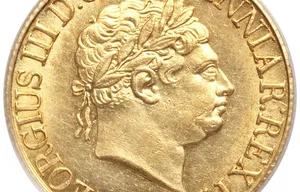
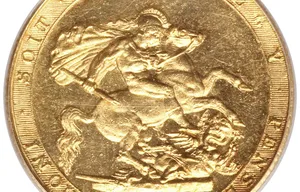
Wear starts on the highest points of the design. On a sovereign that is the hair above the ear and the horse’s flank. On a Victorian penny it is Britannia’s knee and the hair. Compare the highest point with a protected area near the rim: if they look the same, the coin has little wear.
Lustre and surfaces
Lustre is the cartwheel sheen of an untouched surface, visible when the coin is tilted under a lamp. It is present on uncirculated coins, fades through EF, and is absent below that. A coin with wear but full lustre has been cleaned, since the two do not go together, and grading it is the first thing a buyer checks.
Slabbed coins
Third-party grading services seal coins in plastic holders with a numeric grade. For valuable coins the holder reassures buyers and can raise the price; for common ones the fee is more than the coin. Ask a dealer before paying to slab anything.
What grade does to the price
For a common-date sovereign, worn to uncirculated is the difference between bullion and a modest premium. For a scarce date it can be the difference between a hundred pounds and several thousand. For a Victorian penny it is the difference between pence and a three-figure sum. The price records note the grade against every coin they list.